
Warning: description of suicide and suicidal thoughts– Thanks to Ronan Karas for giving me feedback and helping with the editing
London pride is one of the biggest pride events in the world and certainly Europe. This year was particularly significant as LGBTQ+ people around the world celebrated 50 years since the stonewall riots, a major landmark in the LGBT rights movement around the world. The parade, various groups participating, and everyone attending celebrated 5 decades of protests and activism as well as the invaluable the struggles and victories along the way. The party at London pride is always fierce and its always great to see so many queer people (as well as straight allies) being able to express themselves, protest and generally have a care-free atmosphere in a relatively safe environment.
I think this is important because many queer people come from less accepting backgrounds often aren’t able to express themselves at home and if they do very quickly face prejudice or rejection. Whether it’s family members, a lack of community or simply a more socially conservative background, it can often feel difficult to find your sense of place and convey who you really are. In this regard, events like London pride not only form part of the wider protest of the LGBT community, but also become a part of self-expression for many and a networking opportunity for queer people to meet and make new friends and ultimately come to terms with their sexuality, gender identity and sense of place in the world.
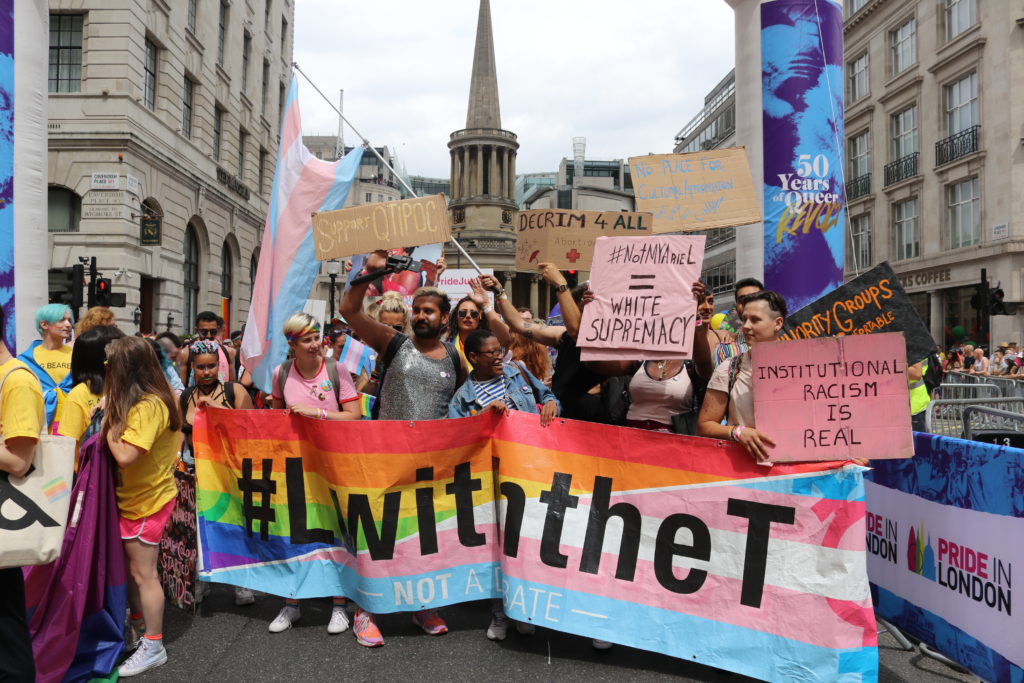
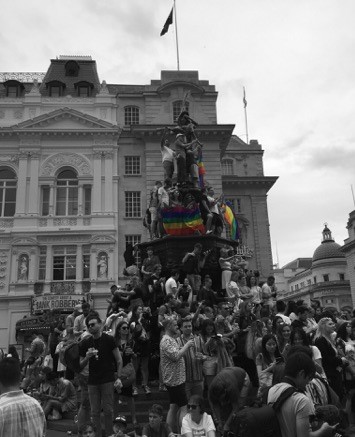
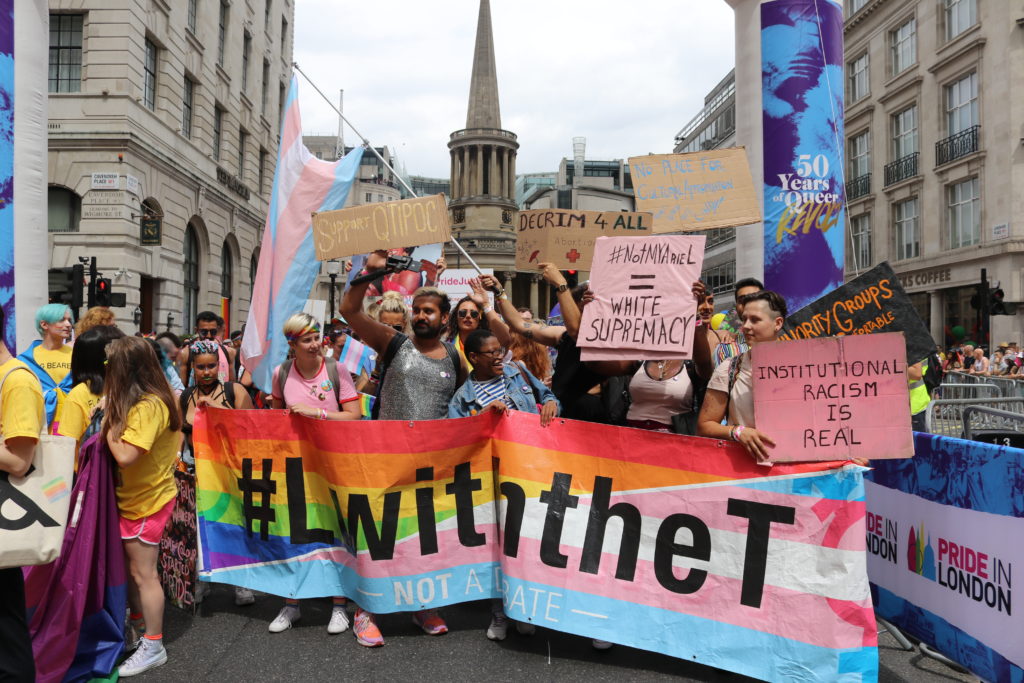
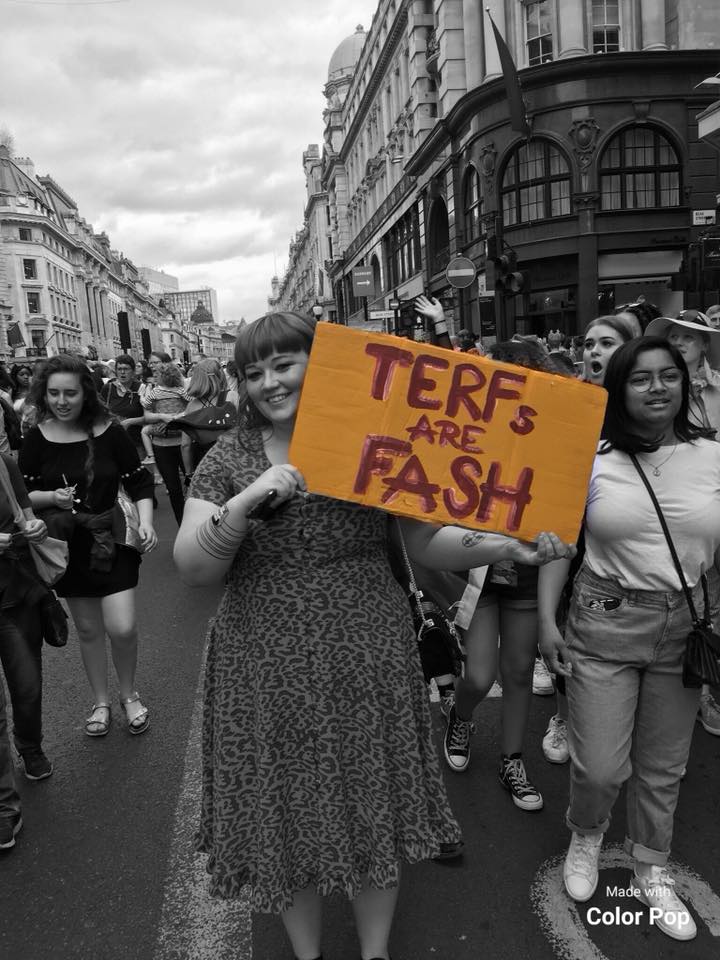
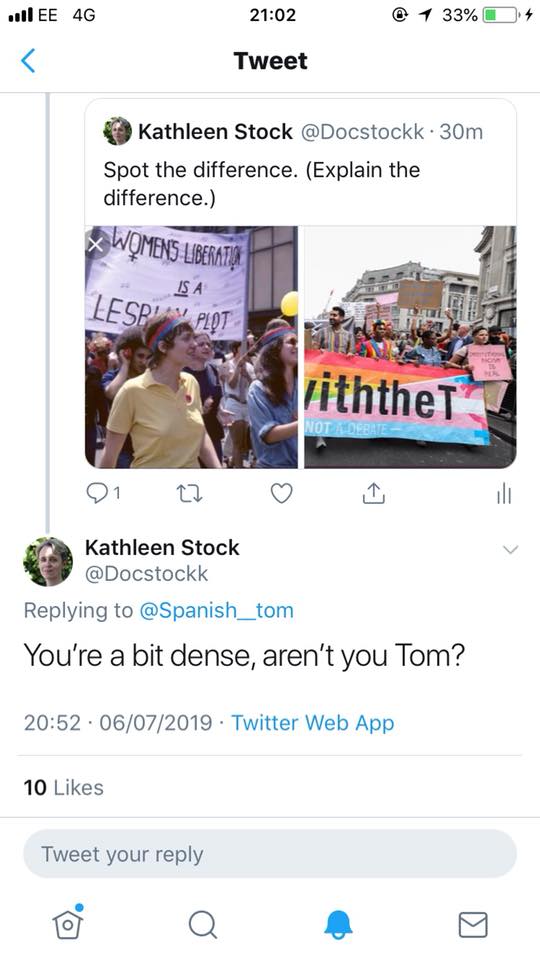
This year the focus for London pride was ‘L with the T’ highlighting the support for Transgender people from lesbians and everyone across the LGBT community. I should say that I’m a cis guy and I can’t speak for trans people or say what it’s like to be trans. All I can do is share what I’ve learnt from my trans friends and the experiences and feelings that they’ve told me about. I’ve seen first-hand the effect of gender dysphoria on mental health, and I’m often saddened by the inordinate waiting times that transgender people have to wait to access even basic healthcare. Shockingly, transgender hate crimes have soared by 81% over the last year (according to a freedom of information request made by BBC news) and there seems to be a rise in the number of TERFS (Trans exclusionary radical feminists) spouting their ‘gender critical’ thought. I find it abhorrent that you could hate someone for a feeling that they can’t control. A feeling that has made some of my friends attempt suicide and it’s ridiculous that some people and even sections of the LGBT community can think that trans people are any different from anyone else. That said, it’s important not to lose sight of and ignore the struggles that many trans people go through in a blanket attempt to make people feel ‘normal’ (if normal is even a thing). I had the pleasure of interacting with one such TERF, Dr Kathleen Stock, who happens to be a philosophy lecturer at my university (Hi Kathleen it’s dense boi again!) I don’t want to name call or label anyone and I rarely engage with blatant hate speech on the internet but seeing the impact that her comments and attitude have had on my trans friends and fellow students (and quite drunk on the train home) I felt compelled to talk to her. She posted two pictures comparing the ‘L with the T’ campaign (featured at the top of this post) with a 70s campaign claiming that women’s rights were a lesbian plot and seemingly suggested that the two were one and the same (trans women can’t be feminists, huh?). Whilst my first reaction, and I’m sure yours too, will be that this is seemingly ridiculous, it struck me that people like Kathleen seem to believe that there’s some hidden ‘trans agenda’ and transgender rights and women’s rights can’t go hand in hand. This is obviously not the case and I was confounded by her response to my question asking her to explain the meaning behind her post. Her only reply was ‘You’re a bit dense aren’t you Tom’ which I can only assume referred to her perception of my intelligence, despite having never met me. She has since deleted that tweet. It’s sad that someone who so often plays the victim and argues for free speech and academic freedom of expression couldn’t even bring herself to debate me or bring up any kind of valid argument to back up her opinion and instead resorted to attempting to insult me. Of course, she’s not the victim of anything other than her own hypocrisy and I feel like I should call her out on her hypocrisy and very calculated game that she fails to play. If by some chance she ever ends up reading this, I’m sure there’d be a queue of people stretching from the University of Sussex down to the Old Steine who would be willing to debate her in a sensible and reasoned manner and they’re all probably a sight less dense then I apparently am . Either way, the rise in transgender hate crimes has reminded me of the way in which pride first began – as a protest – and I’m aware that whilst we’ve come so far we still have a long way to go on so many issues in the LGBT community. It was heart-warming to see so many charities and positive LGBT organisations such as Mermaids, Gendered Intelligence, Samaritans and others taking part in the parade and I hope that this can only increase in future years as we deal with the renewed attacks on the LGBT community.
The Stonewall riots back in 1969 were the catalyst that sparked change in the LGBT rights movement across the world. Back in the 60s and before, LGBT people and relationships weren’t accepted the way that they are now, and people would often find themselves travelling to gay bars and clubs where they could socialise and openly be themselves. Thanks to the efforts of activists, the shutdown of LGBT bars and banning of ‘disorderly’ gatherings of homosexuals was lifted in 1966 and LGBT people could now be served alcohol. As nice as this sounds, engaging in gay behaviour in public was still illegal (holding hands, kissing, or dancing with someone of the same sex) and thus police harassment of gay bars still continued, leading to many bars continuing to operate without licences – in part because they were owned by the mafia (yep all gays were gangsters!) . This ultimately led to the act of resistance and defiance that made up the Stonewall riots – characterised by the key role played by lesbians and trans women of colour. Incredibly, but perhaps not surprisingly, such a small act of defiance and collective action led to a much wider movement and consequently, according to Stonewall, a shift in societal attitudes. The 1970s then saw the rise of radical grass roots community activism and support. The previous Gay Liberation Front formed many splinter groups: the Campaign for Homosexual Equality was a key driving force, and the focus of activism was often explicitly focused on directly challenging heteronormative, conservative norms of family and gender roles; other community-led initiatives coming out of the 1970s included Gay News (set up in 1972), Switchboard (1974) – see this inspirational video by Mark Gatiss (the guy from the Sherlock tv series and the League of gentlemen amongst other things), and the Gay’s the Word bookshop (1979). In many ways the grass roots community activism is what characterises the LGBT community and promotes individual expression and fundamental change. Without the incentive to challenge societal norms and with no collective backing, people tend to revert back to the status quo and fall in line as slaves to the fabricated system that we as humans invariably find ourselves in.
To be honest, we spent most of pride drinking and walking the streets of London from Oxford street to Leicester square following the parade and the crowds of colourful and colourfully dressed people, occasionally browsing the various upmarket shops with rainbow flags and stickers seemingly hastily plastered in their windows. Whilst this is all great fun, I often felt a bit disconnected with reality and the true meaning behind the pride protest. So many corporations ‘paint themselves up for pride’ and ultimately the people in suits effectively ‘hire’ queer people to dance and march for them marketing their agenda and capitalising on the ever growing and more visible LGBT community. For example, Adidas has a section of its site called ‘pride pack’ selling rainbow merchandise to honour pride month, but it was also one of the major sponsors of the Russia Football world cup, a country with anti-LGBT laws. Hypocrites? Possibly. Profiteers of consumer society? Definitely. This is the problem with commercialising ‘awareness’ wherein lies a disconnect with many brands promoting pride when they might not actually be consistent in supporting the LGBT community. Sure, many brands donate a percentage of their profits to charitable causes but this is often little more than a token gesture and highlights the problem with commodifying awareness: whilst it may serve to raise money for a charitable cause, there’s very little guarantee that the money will result in any sort of real change. It’s nominal activism divorced from real action . It might sound extreme, but rainbow t-shirts manufactured by ‘slave labourers’ in Bangladesh working in appalling conditions so that some straight white girl can get drunk for the day probably wasn’t the original motivations or intentions for the rioters back in New York, 1969. That, in my opinion is the fundamental flaw with society’s attitudes to pride today. Granted, the average person can’t take on full responsibility for corporate greed but queer representation is so often overlooked and the true voice of the queer community is ultimately lost.
Perhaps then we can learn something from the grass roots community activism of the original protesters and differentiate ourselves from the consumer society that we’ve created. After all, the original activists didn’t conform to societal norms so why should we? Real progress doesn’t come from the knowledge that change should be made, but rather the power of an individual to take that leap of faith and act. You can make change too and you don’t need to throw bricks at police officers or riot in the streets, appealing as this sounds. I’ve met many people in my life and recently at university who have done just this: I know people that have stolen toilet signs and campaigned for more gender neutral facilities; people that have spoken up about their mental health and fought for change in mental health provision at university as well as organising charity events and awareness campaigns; and people who have worked to eliminate institutional racism and the educational disadvantage faced by BAME students. I’ve also met people who have been a part of creating housing cooperatives such as SEASALT here at Sussex and joining local renters groups such as Acorn to fight rip-off landlords and the exploitation of students in the housing market. Many of my friends and the PhD students I have worked with also took part in Extinction rebellion to fight climate change and the destruction of our natural world. What’s the point? Well, despite all that they’ve achieved, some or all of these people are considered different from society and contrary to societal norms just like the original protesters. In reality though, none of these people are any different to you and me.
Again thanks to Ronan for proof reading and giving feedback! Love you man ❤
 Tears for Queers