


Cw: References to sexual helth, abuse and healthy relationships. References to human rights issues and abuses including LGBTQ+ rights. References to racism and slurs including LGBTQ+ slurs. References to welfare cuts and their asociated effects.
Il n’y a pas plus sourd que celui qui ne veut pas entendre. I think this is a beautiful french proverb and roughly translated it means: there is no one more deaf then the person that refuses to listen. More than a month on and I mean it looks like a bit of a s**t show but in reality, there are a lot of positives we can take from Decembers defeat and the Conservatives apparent victory at the general election. Despite this, I think many people know that the current government just doesn’t listen and understandably there are worries and fears about what the next 4-5 years will bring. In response, I would like to express my opinion and hopes for the future and detail what I think this means for various issues not least LGBTQ+ rights and mental health support in the UK.
As a (now) member of the Labour party I decided to become a lot more involved with the campaign this time around and having lived with and studied at uni with a self-proclaimed Marxist for 4 years I was b̶r̶a̶i̶n̶w̶a̶s̶h̶e̶d̶ encouraged to get more involved with the party (Sorry Ciarán ). Previously, I’ve only been mildly politically active and whilst I was aware of the policies and which party I supported, I never really became that much of an activist or supporter in real life. This was definitely the case during the EU referendum and 2015 election. However, since coming to uni I met a lot of people who are very politically active and engaged in politics and so many of the people I’ve met are passionate about many different causes and willing to translate this into real action.
This isn’t a bad thing though and personally, there are many issues that I feel strongly about. Through my degree in biology, I have become fascinated by how we can combine sustainable development and conservation to empower poorly developed communities to drive habitat restoration, halt species decline and prevent climate change. I was lucky enough to be able to visit the St Lucia reserve in Ecuador through one of my modules at uni and I witnessed first hand how community organisation and a commitment to sustainable living can work in harmony to achieve this goal. In short, the various tribes of this area of Ecuador decided that enough was enough and that there was an alternative to the destructive, market driven logging and land clearance that would inevitably take away these people’s homes and way of living. As time moves on and we edge ever close to the point of no return, described by scientists as the point at which we can no longer avert ecological disaster and climate change, it falls upon the richest most able economically developed countries to lead from the front and demonstrate the ways to solve these crises. The point of this then isn’t to promote my course (although it was a good one) but rather to draw parallels with similar moments and ideas that have perpetuated themselves in UK politics over recent years such as the green new deal or ‘green industrial revolution’ proposed by the Labour party. These have given me hope that there is some alternative to the cycle of neoliberal economics that leads to periods of spending followed by financial crashes and austerity and I truly believe that this can be realised in the UK. Everyone has issues that they are passionate about and most people desire to see change so its important to find your place and stand up for what you believe in.
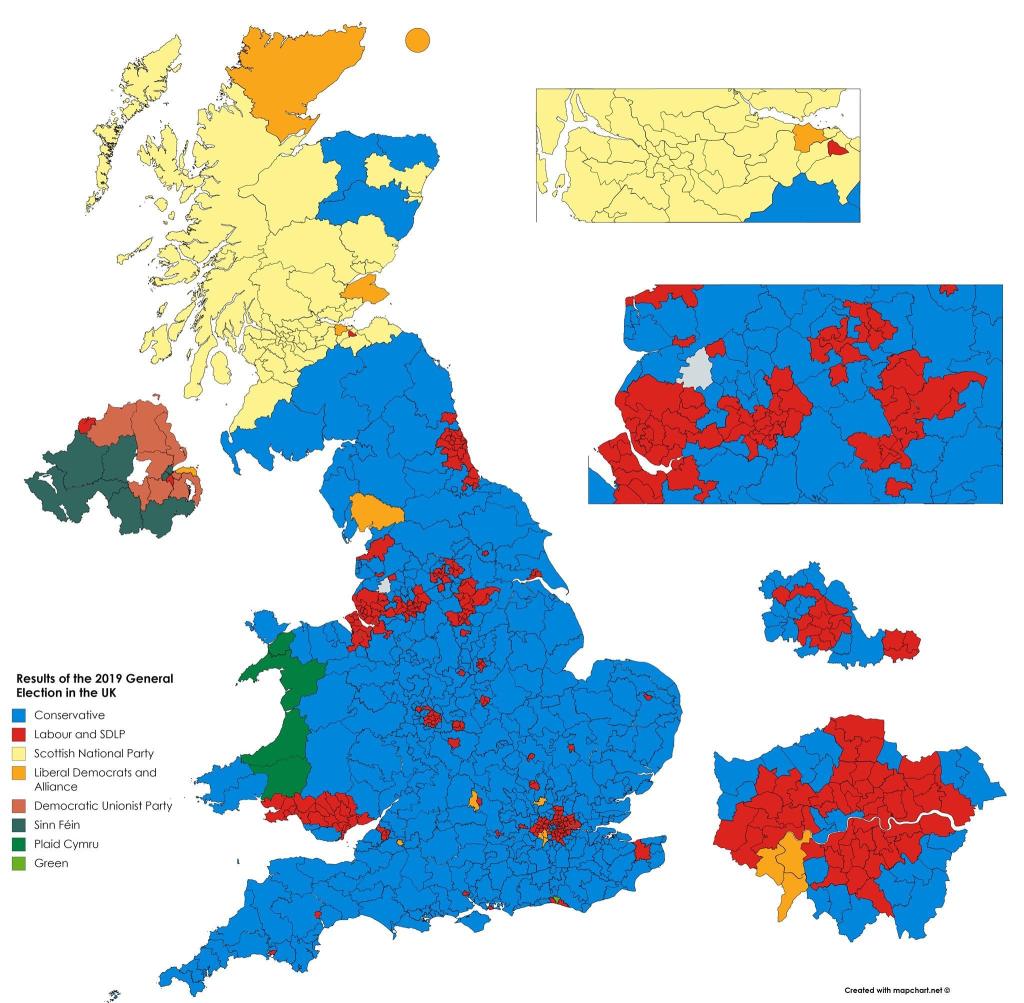
I think a lot of people were drawn to the current politics of the Labour party both as a force of opposition to the Tories but also as a driver of change, giving people a voice over the issues that they really care about. The radical change on offer offsets the perceived current failing economic model and promotes responsible development that empowers minorities and the working class; a model that hits home with so many people and communities here in the UK. However, the facts don’t lie and overall we can’t hide from the reality that Boris Johnson and the Tories secured a resounding victory with 365 seats, an increase of 48 since the last election. I think it is important to analyse why this seeming ‘nightmare’ became reality, particularly after 10 years of divisive Tory rule, an unpopular (ish) government and despite Labours economic polices being popular amongst the UK electorate. For example, 64% of the British public – including 73% of Labour voters and 59% of Tory voters – back Labour’s new plan to bring in rent controls designed to make private rented sector properties more affordable and secure, according to YouGov. 60% of people support increases in Tax for the top 5% of earners and 56% support nationalising the railways. Remember also, that this is against both people that don’t support these policies and those that are unsure or don’t know (see below).
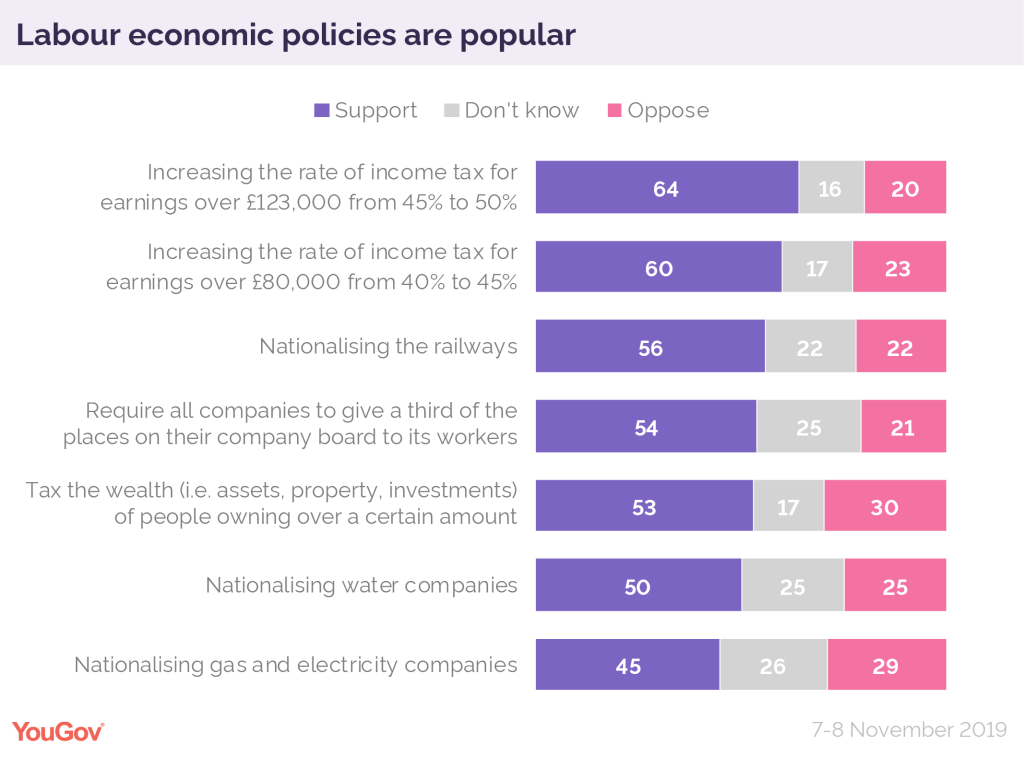
Of course, the question everyone will be asking is how and why did Labour lose the election so badly if their economic policies were so popular? It’s not an easy answer, but definitely one worth exploring. For starters, we should probably address the EUlephant in the room (haha), Brexit. Almost 70% of people put Brexit as their top priority issue ahead of the election (see below) and so it seems a logical place to begin.
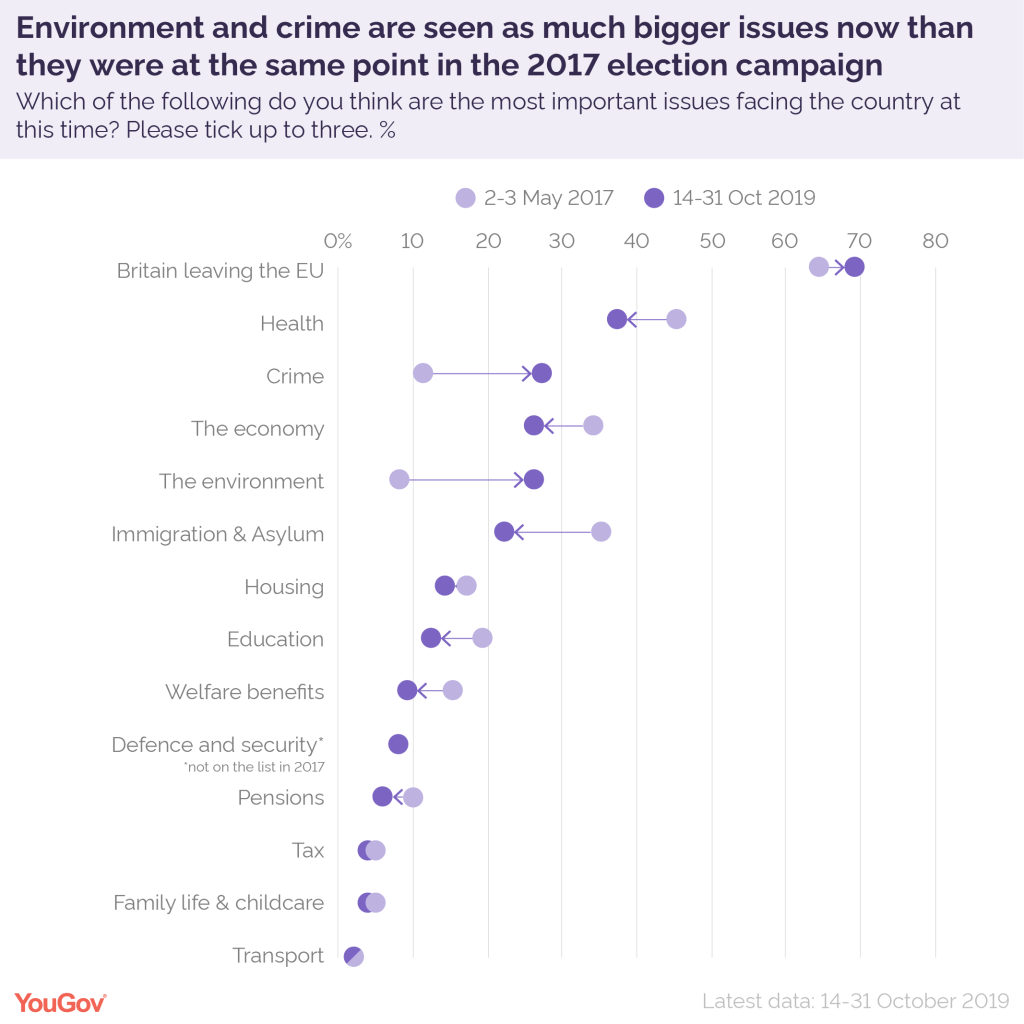
The tories message was clear and simple. Leave the EU deal or no deal and face the consequences, claiming a wealth of untold riches and prosperity as we did (or the 1p box if you’re a remonaer like me and you’ve ever watched the real Deal or no Deal on TV). Labour, on the other hand, had a dilemma and a gross miscalculation of left of centre political priorities. On the one hand, they had to account for left of centre voters the majority of whom voted remain, quite content with the option of another referendum or even the ‘revoke and remain’ policy offered by the Liberal Democrats. On the other hand, the working class core of the Labour party and its support largely voted leave and unsurprisingly had an appetite for an end to the years of ‘dither and delay’ as described by Johson himself. This was evidenced by the May local and European elections where alternative parties saw a surge in support including the Brexit Party – at the expense of Labour and the Conservatives. Therefore, it might seem logical to develop a policy that tries to unite both these factions of the party. Bring together both sides and offer them a chance at what they really want and they’ll stay put right? This might be true if the party was split exactly 50/50 leave and remain and if the numbers leaving for a more ‘hardline’ option on each side – such as those previously mentioned – were equal in number. This was not the case and to my surprise, the party hierarchy decided that the biggest threat lay amongst liberal left of centre voters defecting to the liberal democrats to secure revoke and remain. Albeit this made sense if you look solely at the local elections where the Lib Dems and Greens saw huge gains even if the Brexit party were yet to stand candidates and UKIP had lost their ‘protest vote’ mantra a long time ago. This was, however, also not the case and liberal voters were much more likely to prioritise beating the Tories although this was not always true countrywide. In fact, trying to cater to both sides of the argument leaves you open to attack with the narrative that you are sitting on the fence. Like flipping a coin you’ll never be quite able to get the balance right to make it land on its edge showing both heads and tails. What’s more, if you sit on the fence neither side will fully support you because each will become more and more suspicious of you falling and landing in the other sides court. This is made more prevalent if your party is made up of a cacophony of different voices all lending their opinion at the most inconvenient of times. It was only about halfway through the campaign and just a few short weeks before polling day that the Labour party announced that they had a brilliant plan to focus on the working class leave voters who they had apparently just realised desired Brexit and were willing to desert their party to achieve it. This is something they should have been doing since the start, showing how the Labour party fundamentally stands with and for the working class regardless of the outcome of Brexit. The party and Jeremy Corbyn should have also done a much better job of shifting the discourse away from Brexit, difficult with the departure date just around the corner but worthwhile nonetheless if you can successfully demonstrate that Brexit isn’t the be all and end all of UK politics these days.
In fact, supporting one side of the argument demonstrates a clear vision and clear leadership. Something Jeremy Corbyn’s critics often cited as his weakness. Even if you end up having to support one side over the other you can do no better then to make the best of a bad situation. It could be argued that leaving the EU isn’t even, in fact, a bad situation and I have learnt that there are indeed leftist arguments for an EU departure. Take for example, the Common Agricultural Policy, CAP. One of the flaws of the CAP, as pointed out by George Monbiot in the Guardian, is that it promotes subsidies for wealthy farmers and landowners. The main subsidy, the single farm payment, is given out by the hectare. In essence, the more land you own the more you get paid. A transfer of wealth from the poor to the rich. This goes against almost all leftist principles and you will notice that the people defending these policies are of course Tories and the champions of the free market (Germany and the UK). This, of course, all happens whilst the UK government cuts income support for the poor here at home. As said by Mr Monbiot: “The minister responsible for cutting income support for the poor, Iain Duncan Smith, lives on an estate owned by his wife’s family. During the last 10 years, it has received €1.5m in income support from taxpayers. How much more obvious do these double standards have to be before we begin to notice?”. Another example lies with nationalisation. Whilst the EU doesn’t prohibit or hinder nationalisation per se, in some circumstances rule changes mean that publicly owned utilities will have to be opened up to the private sector. With railways, the fourth rail package due to be introduced in 2023 effectively forces member states to replace some of their public routes with privately operated ones. The logic is similar to that of the UK privatisation in that competition will improve services or at least improve efficiency saving money on publicly owned routes. Although, as the independent points out, British passengers may have a view on whether this is effective. In cases like this, it is clear the membership of the EU does sometimes come into conflict with the socialist principles and policies of the Labour party. Therefore, there is some merit to the case for a leftwing EU exit. I must stress that I voted remain in the EU referendum and I continue to support EU membership if it is possible through democratic means. Remain and reform was my prefered option in the EU referendum and I know a lot of people shared this opinion including the mastermind of this mess David Cameron. Obviously, remain didn’t win and reform is a difficult but not impossible task in the current neoliberal state of the EU. However, the vote has taken place even through dubious circumstances and as such, I think the result should be upheld save for a second referendum. Even then, a second referendum is dangerous as it serves as a double edged sword. On the one hand, you offer the Britsh public a fresh vote with the hindsight and knowledge gained over the past 3 or 4 years. On the other hand, a second referendum only serves to alienate the working class whose confidence in politicians and their ability to follow through with promises is already low. You might end up with an even more decisive vote which would drive an even deeper wedge between these people and the ‘political elite’ alongside the Labour party. Regardeless, the Labour party needed to pick a side. A second referendum with a clear stance or a swift and decisive EU exit, Labour deal or not. If the latter was chosen, I think it would have been wise to emphasise and hammer home the leftist arguments for Brexit like the ones I discussed above. Light at the end of the proverbial (nationalised) train tunnel, perhaps? After all, some leftwing and liberal commentators are very quick to trash the intelligence of the working class or Brexiteers in this case. If this is true, then surely the compassionate leftist arguments for leave could be demonstrated and left of centre voters could at least take solace in the fact that whilst we don’t have remain, we do have reform. Thus, leave can show its benefits provided the leave argument is drawn away from the stereotypical xenophobic ‘take back control’ mantra the Farage and co. have successfully painted as the only true and worthwhile reasons for Brexit.
The Tories are clever and they are cunning. Boris Johnson and Dominic Cummings started sowing the right wing seeds of revolt at a very early stage ( don’t worry, the flowers of this plant are equally as miserable as its politics and safe to say it doesn’t attract bees to the garden). People vs Parliament, politicians vs the people. Whatever you call it Johnson and Cummings cleverly managed to entwine the failings of their own government and the lack of movement with Brexit with the politicians and status quo in parliament. You can’t trust politicians, nothing they ever say ever gets done and they don’t represent me were just some of many opinions touted. The evidence was clear though, progress on Brexit was slow and parliament had so far failed to agree on an EU exit deal wich the people had voted on some 2 years ago. Couple this with almost 10 years of turbulent and controversial Tory rule and you can see why confidence in politicians was low. Ironically, it was the very people responsible for theses failures that in a way promoted their own demise. The consequences of this for the Labour party were in my opinion, disastrous. The left and left of centre often advocate for and provide fact based evidential policy and even offer an idealistic view of the world at times. By now, the seeds of the Tory takeover were breaking through the soil and the very theory regarding the connection between the working classes and the left’s policy and vision was being outcompeted by simple sound bites and a general thrashing of all politicians and their promises. This was only accelerated by the Tory propaganda machine otherwise known as the British press which relentlessly attacked anyone that didn’t love the prospect of a Brexit Britain, fuelled by Johnson and his right wing cronies and free of the mindless rabble of clowns that were supposedly ‘squatting’ in parliament. This led to a mistrust in Jeremy Corbyn and a lack of belief in some of Labours manifesto pledges. So whilst most people supported taxing the very richest, nationalising public services and strong commitments regarding the environment, many failed to believe how these could be delivered. A gap Labour failed to bridge this time around, much to Johnson and Cummings delight.
On top of this, during the campaign Labour failed to repeat its strong showing from 2017 spearheaded by the capitalisation on the popularity of its policies. Ah yes, well thought out, well announced policies with a strong catchy campaign slogan and message. Wait, what was Labour’s campaign slogan for the 2019 election? It wasn’t ‘for the many not the few’, in case you were wondering. In actual fact, it was ‘It’s Time for Real Change’. Surprised? I’m still surprised by the number of people including party members that don’t realise this. After all, if party members don’t even know what your vision is how on earth are the general electorate supposed to know? This was bolstered by the seemingly neverending wave of policy announcements which seemed to result in more and more policies announced each week often before the previous policy had even fully been covered. The manifesto covered most of these policies in detail but many were added during the campaign – usually with great expenses – which were detrimental to Labours ‘fully costed’ defence aimed at its economic critics. With all these policy announcements came confusion. Let’s spend 3 weeks talking about Labours policy to nationalise the broadband arm of BT when in reality Labour want to spend this time discussing their plans for a social housing revolution and their plans to end homelessness. “Hang on, Labour have plans for a social housing revolution?” “Yeah for sure! And a plan to make millions of houses carbon neutral.” “That sounds great but wait, how does that relate to nationalising BT and there was something about trees as well…” Yeah, not ideal. This was evident on the ground too. I remember talking to one lady whilst canvassing – whose name for the life of me I can’t remember – on a social housing estate just into Bevendean in Brighton. Traditional Labour territory if there ever was any. I’ll call her Janet (sorry to whoever this is and for not using your real name although I doubt she’ll ever read this). Now forgive me for stereotyping but she was the type of person that used the phrase ‘I’m not racist but…’ in almost every sentence. It was only after some intense discussion regarding the merits or rather lack thereof of the EU that I finally managed to nail down elements of UK society that she would like to see improved rather than diminished or taken away. Homelessness came out on top and I remember her saying things like ‘it’s not good enough’ and ‘something needs to be done’ citing Brighton’s homelessness problem and the difficulty homeless people face trying to find a shelter with the lack of quality social housing. I explained to her about the Labour parties plans to start a social housing boom and mentioned that just this morning, in fact, John Mcdonnell had announced Labours plan to eradicate homelessness in Britain. I don’t know what I was expecting based on how the conversation had gone so far but the resistance to seemingly beneficial solutions to her top priorities did take me aback somewhat. ‘Well I haven’t heard of it. All Jeremy Corbyn seems to talk about is free broadband’ ‘I would have voted for him 6 months ago, but not now’. Clearly, she was missing the key message and policies that Labour were proposing this time round. I liaised with the board runner (the person who records the information about the voters from each household) and discovered that her last recorded vote was for the BNP back in 2015. This at least explains her seemingly expert knowledge on the EU and European affairs but it misses the point. The point is that voters like her, yes even those who are ‘not racist but’,* make up the core working class support of the Labour party. Their opinions need to be valued, oppression fought against and rights upheld, just like everyone else carried by the progressive movement.
*To clarify, I do not support racism, racists or any other kind of hate speech/groups within the Labour party. I used my example to demonstrate how working class leave voters should be listened to.
Jeremy Corbyn might be leaving now and the leadership election in full swing but the party needs to retain and win back these people if it has any chance of moving forward. The challenge of this is that we must also not forget or lose the wave of optimism and interest in politics generated by the Corbyn era and its movement. Remember this: Jeremy Corbyn and the Labour party in 2019 and 2017 secured more votes than Tony Blair in 2001 and 2005, Gordon Brown in 2010 and Ed Miliband in 2015. Most of the newfound Tory voters did so with great pain and many with reluctance. However, numerous people have suggested they wouldn’t hold back from voting Tory again if the Labour party doesn’t change. Yes, you could argue that Brexit was a big factor in Labour’s demise, or that Jeremy Corbyn’s leadership was poor or that the next leader should play more to the tune of the Tory tabloids but crucially these could be seen as excuses for ignoring the red wall voters and fundamentals of Labour’s principals. Labour should champion the working class and minorities standing up for people and planet and the Labour party should challenge the capitalist bourgeoisie elite that controls British society.
The future and what next for people’s rights in the UK?
After the UK general election, for many people, the outlook for our future in the UK might look bleak even scary. After all, the current government and its leader have demonstrated time and time again that they are unfit to represent minorities and stand up for peoples basic rights human or otherwise. Whether it’s racist comments, deportations of migrants or a sluggish, even outright refusal to act on increases in LGBTQ+ hate crimes and a deteriorating health service, the next 5 years might seem hopeless and downright terrifying. However, to lose hope in such a way is to lose hope of resisting all of the terrible things that the Tories will do or just simply ignore. This is not something we can allow to happen. Now I can’t cover issues regarding all minority rights here but rest assured I stand up for everyone’s rights and as a member of the LGBTQ+ community I will cover our rights in detail. The UK is actually a strong contender when it comes to LGBT rights, even if it is sometimes slow to act on issues. However, this is only a comparative opinion. If we take the situations of people in some countries such as Saudi Arabia or Russia where LGBTQ+ people have few if any rights and protections then it becomes obvious that it doesn’t take much to be a world leader. To demonstrate this, there are numerous rights that LGBTQ+ people still don’t have here in the UK even in 2020:
- Gay conversion therapy is still legal in the UK
- Trans prisoners are put in the wrong prisons – unless they have a gender recognition certificate
- Gay and bi men can’t donate blood for 3 months after having sex
- Similarly, sex workers can also only give blood if they’ve not had sex for 3 months
- There is no non-binary gender option on passports
- HIV-prevention drug PrEP is not widely available and not subsidised on the NHS
- No central London LGBTQ+ venues are fully accessible and many others around the country have similar issues
- As until last year, Gay marriage was still illegal in Northern Ireland. Thankfully this has now changed
- Sex education doesn’t teach LGBTQ+ relationships or issues – this has been voted on and is due to be introduced in September 2020
- LGBTQ+ hate crimes are still on the rise and LGBTQ+ people can’t travel safely on public transport – LGBTQ+ hate crimes rose 10% over the last year and 55% over the last 5 years in London
- Teaching kids that LGBT+ people exist has caused protests in two cities (Manchester and Birmingham)
- In Northern Ireland, trans people can be legally discriminated against – they can be legally denied housing because of their gender identity
- Sexuality and gender identity aren’t included in the census – the Scottish parliament will include this information in the next census in 2021
- 24% of homeless young people are LGBTQ+
- Funding for LGBTQ+ youth services is being cut. Fewer services = more mental health issues and more homelessness
- The Gender Recognition Act (GRA) still hasn’t been reformed
- Gender Identity Clinics are at capacity, waiting lists are long and many GPs aren’t trained to deal with trans issues – trans people often have to wait for 1-2 years just to get an appointment and up to 5 years to get surgery on the NHS with mental health issues including self harm and suicidal thoughts in between. For example, 29% of trans people have attempted suicide and 89% have thought about it.
Courtesy of Pink News (June 13th 2019) with some data from National LGBT survey
Is the government commited to protecting and extending LGBTQ+ rights in the UK and elsewhere?
So what next for LGBTQ+ rights and what does the Tory government plan to do? Conveniently, the Government Equalities Office have produced their ‘LGBT action plan’ in response to the National LGBT survey which details their responses to some of the above issues. The government sets out 4 key policies that it wishes to prioritise:
• Appointing a national LGBT health adviser to provide leadership on
reducing the health inequalities that LGBT people face;
• Extending the anti-homophobic, biphobic and transphobic bullying
programme in schools;
• Bringing forward proposals to end the practice of conversion therapy
in the UK; and
• Taking further action on LGBT hate crime – improving the recording
and reporting of, and police response to, hate crime.
The detailed plan for each of LGBT rights, health, safety, education and more can be seen within the document and it’s worth noting that £4.5 million in funding will be given to deliver commitments in the action plan and other projects, through an ‘LGBT Implementation Fund’, with additional funding sought after 2020. The government also says: “We will also provide support to small LGBT charities and organisations looking to diversify their funding as part of this package.” This news is positive and it is clear that the government are at least willing to engage with the LGTBQ+ community about what issues affect us most and what more needs to be done. The action plan also highlights areas that the government will act upon although unsurprisingly the wording is vague and many of the pledges relate to consultations and trials rather than direct promises. It must also be noted that the LGBT action plan was published in July 2018 and relates to action that ‘this government’ will take. The government has obviously changed since then, with the election last December even if the governing party has remained the same. Thus, this voids many of the promises made by the document save for those already committed to or entered into law such as LGBTQ+ inclusive sex education. Notably, the Tory manifesto at the last election omitted almost anything regarding minority rights and hate crimes with only a brief line detailing how they would: “vigorously combat harassment and violence against all religious groups, and against LGBT people.” with another line explaining how they would: “host the UK governments first international LGBT conference.” There are also issues conveniently not mentioned in the LGBT action plan. For example, the EU’s Charter of Fundamental Rights and Freedoms is the only international law that protects LGBT people from discrimination in the workplace. There are many other issues covered by this legislation but Boris Johnson has been silent on whether he would replace this with equivalent domestic policy now that we have left the EU. Worryingly, the right of the Tory party (or are those mainstream Tories these days?) despise these laws and would celebrate their passing. It’s not looking hopeful. Victims of anti gay laws should also be compensated. Tens of thousands of men were prosecuted for consenting adult same-sex acts even after decriminalisation in 1967. Many men lost their jobs, suffered the stigma of criminal conviction and were fined or even jailed. Theresa May declined to offer compensation similar to that agreed by the German government with regards to homophobic laws. Boris Johnson could and should rectify this. Britain must also become a safe haven for LGBTQ+ refugees. The independent comments: “some victims of anti-LGBT+ criminalisation, violence and discrimination abroad flee to the UK to claim asylum, only to find the asylum system is stacked against them: they are sometimes locked up in immigration detention centres, routinely disbelieved even when they produce evidence, and are banned from working while their asylum claims are processed, which can take several years, despite many of them having employment skills that the UK needs”. I find these kinds of practices abhorrent and I find it sad that even in 2020 the UK still can’t use its global influence to put pressure on anti-LGBT countries and their legislation worldwide. None of these additional policies are difficult or costly. Often all it takes is a shift in attitude and a bit of compassion. The question is, will Johnson try, or will the Tories continue to conveniently omit key policies from the manifestos? The next 5 years will tell but as with everyone’s rights, 5 years time is too late. The time is now.
Can we trust the Tories? – Is the government even commited to its own proposals?
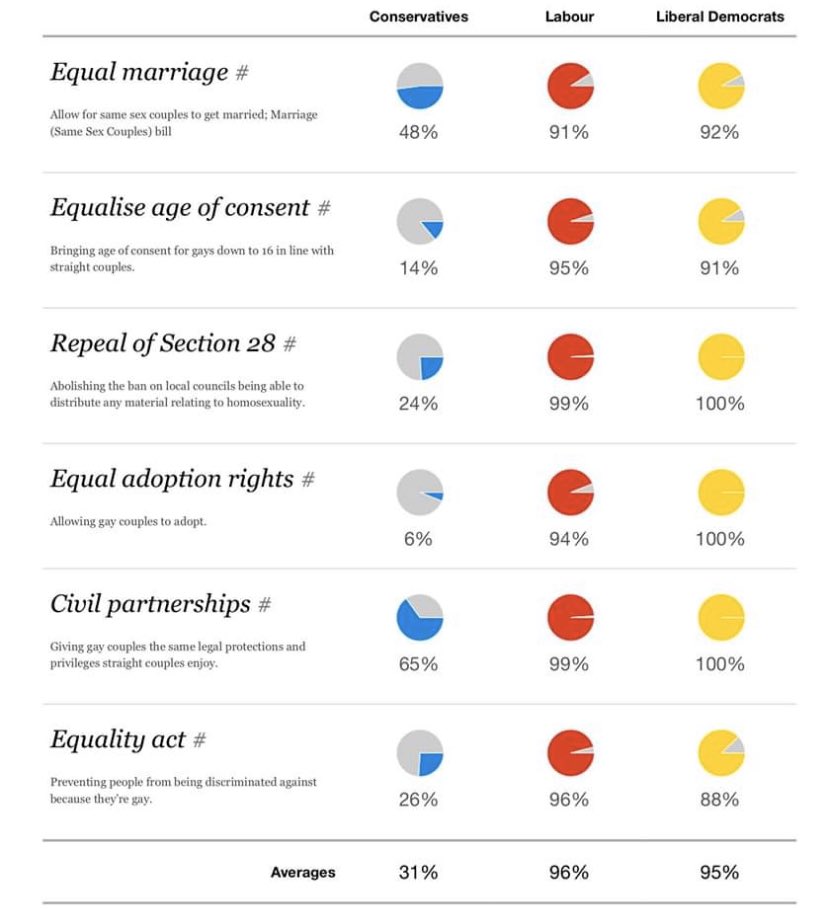
Logically, the next question that arises then is whether the government is actually committed to any of its aforementioned proposals. It’s record and the Tories record as a whole isn’t good. For a start, in 1988 Margret Thatcher introduced section 28, legislation that would outlaw the promotion of homosexuality and same-sex relationships in schools – only repealed in 2003 under the Labour government. Then there’s the issue of the parties voting records. Again, the Tories record is terrible. Yes they did legislate for gay marriage in July 2013 but this was with the help, or should I say persuasion, of the Liberal Democrats. Even then, only 48% of Tory MPs voted in favour of the bill and other voting records don’t make good reading (Just see for yourself below). Despite this, Johnson was the highest ranking conservative to come out in support of gay marriage and in general, he has a socially liberal voting record. (Go to theyworkforyou to see your MPs record). They say actions speak louder then words but its hard to ignore the comments Johnson has made over his career particularly in his earlier days such as in a 1998 column where he referred to gay men as “tanked topped bum boys” and in a 2001 book where he wrote on same sex marriage: “If gay marriage was OK – and I was uncertain on the issue – then I saw no reason in principle why a union should not be consecrated between three men, as well as two men, or indeed three men and a dog.” On the surface, his opinion might shave shifted since then. You have to remember however that these comments came at a time when the Tories were in opposition following a landslide Labour victory. They had nothing to lose and were free to state their honest opinion, as Johnson clearly did. There were no elections to contest, people to win over or votes to collect. Nowadays, politicians have to be a lot more careful about what they say, particularly with social media playing a key part of someone’s image. Back in the early 00s, an abstained vote here or the odd off comment there wouldn’t damage your reputation as much and so quick one-liners or buzzwords about protecting peoples rights weren’t necessary. In some ways, this reminds me of Donald Trump during his election campaign in the US. I remember he was seen waving a pride flag in front of a cheering crowd emblazoned with the words ‘LGBT FOR TRUMP’, only the flag was upside down. I can’t help thinking of a similar image with Boris Johnson and I wonder if he himself knows which way he wants his flag to fly.
What can I do to make a difference? What can we do to pressure the government and oppose the Tories?
“Change will not come if we wait for some other person or some other time. We are the ones we’ve been waiting for. We are the change that we seek.” – Barack Obama
Like him or not, Barack Obama’s message of hope and vision for change resonates with elements of the progressive movement today. He is right in the fact that change will not come if we wait. We are the people that change has been waiting for. Young people in particular are the generation that recognises these changes and understands their value. In a recent speech for Bernie Sanders campaign to become the Democratic nominee in the 2020 election, Killer Mike rightly asserts that “the time is now.” “It ain’t tomorrow”, “It ain’t the day after”, “It ain’t coming next week.” If you haven’t seen that speech I strongly recommend you go watch it now (included below). You won’t make change just from the knowledge it is needed. You won’t make change by sharing articles on social media (although social media can be effective for many things). You won’t make change by waiting until tomorrow or by making excuses. Join something, support someone, knock on someone’s door. This is real community action. This is how we make change.
If you want to get involved and make a real difference over the next 4 or 5 years there are plenty of things you can do. Don’t be scared. I know that’s easier said than done but so many of the people I have met have been so welcoming and come from such a diverse range of backgrounds. I’ve met many people in the LGBTQ+ community who are a part of the Labour movement both in real life and online. As someone who has suffered from social anxiety, it gives me euphoria, a sense of purpose to finally be able to contribute to the issues I have always felt so strongly about. Don’t despair. Community action does work and change does happen. Just look at the publicity Extinction Rebellion have received putting environmental issues at the top of the agenda. They’ve even helped prevent Heathrow airport from opening a new runway amongst so many other things. A disastrous precedent that would have been set for the environment in the UK. The government have come under immense pressure to improve LGBTQ+rights. From repealing section 28 in 2003, passing gay marriage (in the UK, 2013 and now In Northern Ireland, 2020) and today releasing their LGBT action plan in response to the national LGBT survey. These things wouldn’t have happened without people like you and me. Closer to home and many of my friends and colleagues at university have helped reshape the mental health landscape there with campaigns for the students union and others such as Sussex Under the Sheets promoting healthy sexual and emotional wellbeing as well as healthy relationships. In Brighton, some of my friends take action with Acorn, a renters union. They have successfully prevented numerous evictions instigated by slum Landlords and pressure letting agencies to take action on poor quality student accommodation. Where to start then? Find your sense of purpose. The environment? LGBTQ+ rights? mental health? Slum Landlords? The NHS? Rights for migrants? Whatever it is that you want to change. Whatever it is you wish was better. Find it and join the movement. You don’t even need a purpose, just a desire to help people and improve people’s lives. Most organisations have no commitment either. You just sign up and join in when you can. I know also that it’s often not easy for some people to get out of the house and attend events all day especially if they are far away or on inaccessible public transport. That shouldn’t be an issue. Just join in when you can. I’m sure many people will be happy to send you resources to use at home and often there are many more local events you can attend. There are also many ways you can contact people to ensure events are made accessible for everyone. I’ve compiled a top 4 list below of what I think are the most important things you can do, but it is by no means exhaustive:
- Join the Labour party! – it’s only £3 a year for young people (19 and below) and students. Vote in leadership elections, vote on policies at the conference and support progressive change. The only way you can make a political party that works for you is by joining one and making your voice heard. The Labour party champion the working class, stand up for minorities and migrants and work to protect the UK’s vital institutions such as healthcare free for all through the NHS. The party also have various subgroups and societies you can join such as LGBT Labour, Women’s Labour, Scientists for Labour and many more.
- Join a union – whether its a large union that projects workers rights or a smaller one such as Acorn; a renters union that stands up for local communities, against slum landlords and for providing quality affordable housing amongst other things. If you’re at uni you can support the UCU strikes.
- Get involved with local campaigns/volunteer with charities – Extinction rebellion are a good example of a successful campaign group and have many local branches. Other campaigns I have seen include the Labour Campaign for Trans Rights and at uni, Access Sussex. There are also a wide variety of charities you can volunteer for covering a wide range of issues and people.
- Sign petitions – Fight disability cuts, protect migrants, stand up for people’s rights, put pressure on the government. Although it doesn’t always seem to achieve that much, the government do have to acknowledge the issue and petitions with over 100,000 signatures have to be debated in parliament. It also helps to raise the profile of certain issues.
The general election in 2019 was a tiring campaign. A shock to some but a wake-up call to many. Personally, I wish for an open and tolerant Britain powered by the modern progressive movement that I now find myself a part of. In part, joining the Labour party and becoming involved in politics has given me a sense of purpose and hope for the future. I think many young people feel the same. I’d hope that this optimism doesn’t die out and that young people continue to be the heart of our newfound progressive political movement. However, the December election showed that not everyone shares the same view and highlighted what many people in Britain are prepared to prioritise. It’s important to recognise that these people can’t be left behind or ignored if progressive politics is to become the mainstream. Often, elections are about passion and a vision for the future. Sometimes, elections are about calculated risks and winning. Boris Johnson and the Tories demonstrated the latter. It’s not over though. Progressive policies are popular and people’s rights can be fought for. It’s up to us to act now and fight for them securing a future fair for all – to steal an old cliché. There are so many people that are denied under the current system, there are so many issues that are worth fighting for and there are so many people calling for change. Let’s hope it doesn’t fall on deaf ears.
 Tears for Queers