
CW// Biphobia, stereotypes, prejudice transphobia, discussions of sex and sexual acts
September 23rd is Bisexual Visibility Day. Bisexuality is often marginalised and forgotten both within and outside of the LGBTQ+ community and because of this, many bisexual people have very different experiences to lesbian and gay people, despite the fact their issues are often viewed exactly the same or dismissed entirely. In the United States, only 19% of bi people are likely to be out to all or most of their close friends as opposed to 75% of gay and lesbian people. The dismissal of bi people has likely led to the rise in the classic but harmful stereotypes that depict them as ‘greedy’, ‘going through a phase’, to name a few and this can often and perhaps surprisingly come from people within the LGBTQ+ community who can view bi people as promiscuous or indecisive. However, I think the symptoms that these stereotypes provide are endemic of a wider problem, a reluctance to step outside the binary and a refusal to respect and support people’s self-identification, both within the LGBTQ+ community and from cishet society.
Firstly, I think it’s important to discuss the traditional prejudices that bisexual people face. Most of these are related to stereotypes and assumptions that people make associated with someone potentially dating people from more the one gender. Here is a list of some of the most common myths about bisexual people and my very own mythbusters to accompany them:
- Bi people are greedy – In most circumstances greed is a choice. Your sexuality is not. Therefore, being attracted to more the one gender doesn’t make you greedy, it’s just a personal decision that defines how you identify.
- Bi people are more likely to find a partner and more likely to cheat – Similar to the above, this likely stems from the over sexualisation of bisexuality and the fact that bisexuals can’t make up their minds one way or another, being attracted to everybody. In reality, being bi only really adds on a small percentage of LGBTQ+ people to your potential ‘dating pool’, if you really want to look at it that way. Furthermore, people cheat for a variety of reasons and your sexuality really has nothing to do with it. Taken from Insider.com: “Writer Maria Burnham put it best in HuffPost, saying, “There is no legitimate study proving [that bi people are cheaters], nor would it be easy to [obtain] accurate results if one was to perform a study, but it appears that this myth is touted in cities all over.”
- Bi people are promiscuous and are always looking for threesomes – A lot of people have asked me if i’m ‘into’ threesomes or if i’d ever date a guy and a girl at the same time. Personally, this is something i’m open too but for many bi people I imagine this is not the case. Again, this probably stems from the over sexualisation of bi people and the narrative that they always want to sleep with as many people as possible. I don’t like this idea and think it harms both bi people and genuine discussions around relationships including open relationships and polyamory.
- Bi people are just confused (either straight or gay) and they can’t pick a side – Picking a side is for things like sports teams not sexualities. Sexuality can be a very confusing and complex issue for many people and often it can take some time for you to truly discover who you are. Many bi people remain so throughout their entire lives whilst some go on to identify as gay or even straight. This is completely normal and forms a part of one’s self acceptance and own identity. Sexuality is also fluid which leads on to the next point.
- Bisexuality is a stepping stone to becoming gay – This is not true although often people can identify as bi before coming out as gay or vice-versa. This is completely normal and a valid way of exploring ones sexuality. Seuality is fluid and just because someone identifies as something at one point doesn’t mean they can’t go on to change this as they understand themselves more.
- Bi people must be 50/50 attracted to men and women – Some bi people might be more attracted to men some more to women some to non-binary people and others who aren’t on the gender binary. In reality, sexuality exists on a spectrum and people should be free to identify as they wish.
- Bisxuality is binary i.e bi people are only attracted to cis men and women – As we discussed above bisexuality isn’t binary and bi people can be attracted to more than one gender/sex. Putting people into binary boxes invalidates people’s identities and removes trans and non-binary people.
- You’re not queer or LGBTQ+ if you’re in a straight relationship – Roughly 9/10 partnered bisexual people are in opposite sex relationships but this doesn’t make them any less queer or LGBTQ+.
- Bisexuality is equivalent to pansexuality – There is a lot of overlap between bisexuality and pansexuality but this doesn’t mean that they are the same. Often times, pansexual people would be attracted to someone regardless of their gender as opposed to a bisexual who is attracted to more than one gender. Remember though that sexuaity is fluid and people will identify in different ways.
- Bisexuality isn’t real – The simulation hypothesis is cool but being biphobic isn’t. If bisexuality isn’t real then none of us are. Bisexuals exist and we are valid.
I hope any fellow bi people reading this can relate to these stereotypes and their effects. For anyone else, please read them and familiarise yourself with how to spot biphobia in everyday situations. I often receive subtle but telling comments from people most of whom I assume are unaware that they are being biphobic. questions like: ‘I’ve never seen you kiss or date a girl’ or ‘what’s your preference’ might seem harmless on the surface but be aware that I have probably been asked these questions ten times before and it’s tiring having to explain and prove your sexuality to people on a regular basis.
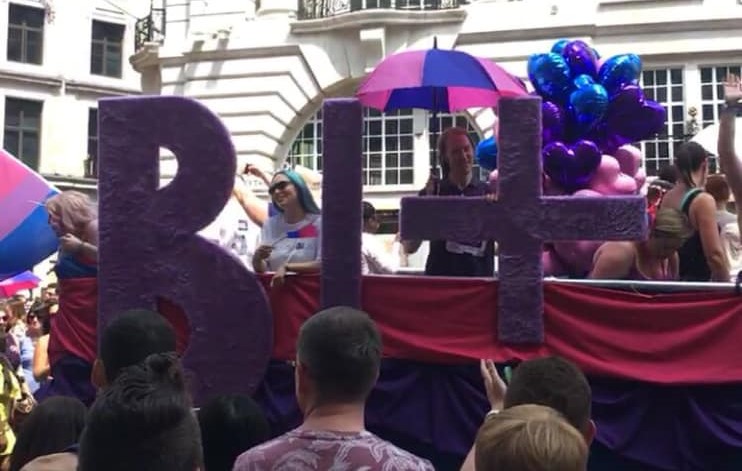
Much like these constant explanations, it is iportant to challenge the traditional notions of bisexuality as a binary affair. Despite the fact that this is ahistorical (bi people have always been attracted to many different genders), it only serves to alienate anyone that doesn’t conform to the gender binary and bi’s that are attracted to people outside of those that identify as strictly ‘male’ or ‘female’. The 1990 Bi Manifesto says “Do not assume that bisexuality is binary or duogamous in nature: that we have “two” sides or that we must be involved simultaneously with both genders to be fulfilled human beings. In fact, don’t assume that there are only two genders.” This was in the early 90s at a time when ‘homosexual’ relationships and LGBTQ+ issues were still largely unnacepted and the very real issue of section 28, a homophobic law passed by Margret Thatcher, effectively censored any discussions of sexuality and gender in public life, stifling progress and reinforcing cishet narratives as the established norm. This quote and others like it prove that despite the difficult circumstances, queer people were still ready to test the societal boundaries and explore the limits of their sexualities and gender identities. What’s more, it serves to demonstrate that the notions of gender, sex and bisexuality as a binary concept have always been challenged by genuine members of the queer community allowing people to free themselves and discover their unique identities in their own time. Biphobia is still very real today but further people are still attached to the idea that bi means binary and are unwilling to accept a progression towards an acceptance of differing identities. Hate groups like TERFS (Trans Exclusionary Radical Feminists) use binary concepts to push transphobic and biphobic narratives to make people fit their narrow minded viewpoint forcing them to think twice about being comfortable in themselves. To them, any discussion of gender and non-binary topics is an ‘attack’ on women’s rights but in reality this is a mere smokescreen for their prejudice and terror at the thought of having to accept people for who they really are. In wider society, binary narratives keep bisexuality a stigmatised, sexualised affair. In general, people are discouraged from forming their own identity and instead pushed into a box of ‘having preference’ or being ‘partly gay’ which closets people from expressing their true personalities. Without the binary then sexualaity becomes more fluid and people are free to form attractions to whoever they wish allowing biseuality to exists in multiple ways defined on an individual basis. Discussion around someones own sexual preferences would be more open as people would be motivated to share their attractions and would be encouraged to explore ideas around relationships such as polyamory and openness, without increasing the already burdening stigmas. Removing the sliding scales of sexuality and gender also gives bi people the space to fight back against the stereotypes and progress towards a liberating society where exploring your queer identity is the acceptable norm. If more people supported and understood self-identification then the default thoughts of ‘greed’ and ‘confusion’ (amongst others) would be marginalised in favour of giving people the time and space to find and accept their own sexuality and gender identity.
Overall, binary notions help reinforce the opinions that bi people must have a definitive preference between cis men and women, must exists on a sliding sexuality scale whereby they are always partly or almost straight/gay and one where non-binary identities are marginalised and not included in bi discussion. Perhaps, a lot of these issues are remnants of laws like section 28 or societal attitudes of the past, it’s hard to tell without doing more research. However, what is certain is the fact abolishing the biary notions of bisexuality would help free bi people of the stereotypes and stigmas that surround their sexuality. Furthermore, this would give space for trans and non-binary people to comfortably fit under the bi and pan umbrella and help change societal attitudes towards a system where people are freer to take the time to discover their won unique sexuaity and gender identity.
Help and support organisations:
All for help with LGBTQ+ issues related to sexuality, gender identity, mental health, hate crimes and more
- Samaritans – if you’re feeling down, hopeless or have thoughts of self harm, and suicide
- Grassroots suicide prevention – similar to Samaritans with help pages and guides
- Swtichboard (LGBTQ+) – 03000 330 0630 – LGBTQ+ helpline (10am -10pm)
- Mind – Mental health advice and services
- Nightline – listening service ran by students for students (check if your uni runs this on the Nightline website)
- NHS for self harm, suicidal thoughts and mental health or for help with gender dysphoria and gender reassignment surgery etc
Carrds:
 Tears for Queers
Thanks for this, Tom!
LikeLike